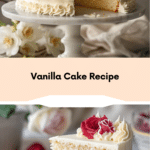
Why You’ll Love Vanilla Cake Recipe Recipe
This vanilla cake has a light, tender texture without being dry or crumbly. Using both butter and oil gives you the best of both worlds: butter provides a rich homemade flavor, while oil helps the cake remain moist even after it has cooled.
The recipe also uses straightforward baking ingredients and doesn’t require complicated techniques. The batter comes together quickly, and baking it in two 8-inch pans creates beautiful layers that are ideal for frosting and decorating.
Buttermilk adds subtle tanginess while helping produce a particularly soft crumb. The vanilla flavor is noticeable enough to make the cake delicious on its own, yet neutral enough to pair beautifully with chocolate, vanilla, fruit, caramel, or cream cheese frosting.
Ingredients
(Tip: You’ll find the full list of ingredients and measurements in the recipe card below.)
- ½ cup unsalted butter, softened to room temperature
- ½ cup avocado, canola, or vegetable oil
- 1½ cups granulated sugar
- 4 large eggs, preferably at room temperature
- 1 tablespoon vanilla extract
- 3 cups all-purpose flour
- 1 tablespoon baking powder
- ½ teaspoon salt
- 1¼ cups buttermilk, preferably at room temperature
- 1 batch chocolate frosting, or another frosting of your choice
- Sprinkles, optional
Directions
- Preheat the oven to 350°F (177°C). Line the bottoms of two deep 8-inch round cake pans with parchment paper and lightly grease the sides. Set the prepared pans aside.
- Add the softened butter, oil, and granulated sugar to the bowl of a stand mixer. Alternatively, use a large mixing bowl and an electric hand mixer. Beat until the mixture is creamy and thoroughly combined.
- Add the eggs one at a time. Beat well after each addition so every egg is fully incorporated before adding the next.
- Add the vanilla extract and mix until evenly incorporated.
- In a separate medium bowl, whisk together the all-purpose flour, baking powder, and salt.
- Using a spatula, alternate adding portions of the dry ingredients and buttermilk to the butter mixture. Begin with the flour mixture and finish with the flour mixture, gently mixing by hand after each addition until just combined. Avoid overmixing. A few small lumps in the finished batter are fine.
- Divide the batter evenly between the two prepared cake pans. Bake for approximately 30 to 35 minutes. The cakes are ready when their tops spring back when gently touched and a toothpick inserted into the center comes out clean or with a few moist crumbs but no wet batter.
- Let the cakes cool in their pans for 10 to 15 minutes. Carefully invert them onto cooling racks and allow them to cool completely before adding frosting.
- Once completely cool, frost the cake with chocolate frosting or your preferred frosting. Add sprinkles or other decorations if desired, then slice and serve.
Servings and timing
This recipe makes approximately 12 servings.
Preparation and baking require about 1 hour and 5 minutes in total, although additional cooling and decorating time may be needed before the finished cake is ready to serve.
For the best results, allow the cake layers to cool completely before frosting them. Frosting warm cake can cause the frosting to soften, melt, or pull crumbs from the surface.
Variations
Vanilla buttercream is an excellent choice if you want an entirely vanilla-flavored cake. You can also use cream cheese frosting for a slightly tangy finish or chocolate buttercream for the classic combination of vanilla cake and chocolate frosting.
For a lemon variation, add finely grated lemon zest to the batter and pair the finished cake with lemon or vanilla frosting. A small amount of almond extract can also be added alongside the vanilla for a more bakery-style flavor.
To make a celebration cake, cover the frosted cake with colorful sprinkles. Fresh berries can be added between the layers for a fruity contrast, while strawberry or raspberry filling can turn the basic vanilla cake into a more elaborate dessert.
The batter can also be adapted for cupcakes. Because cupcakes bake more quickly than full cake layers, begin checking them well before the 30-minute mark.
Storage/Reheating
Store a frosted vanilla cake in a covered cake container or airtight container to prevent it from drying out. Depending on the frosting used, it can generally be kept at room temperature for a couple of days. Cakes containing frostings or fillings that require refrigeration should always be refrigerated.
For longer storage, keep the cake covered in the refrigerator for up to about 5 days. Allow individual slices to sit at room temperature briefly before serving for a softer texture and fuller flavor.
Unfrosted cake layers can also be frozen. Once completely cool, wrap each layer tightly in plastic wrap and place it in a freezer-safe container or bag. Freeze for up to 2 to 3 months. Thaw before decorating.
Vanilla cake generally doesn’t need reheating. If you prefer a slightly warm unfrosted slice, microwave it for only a few seconds. Avoid overheating, as this can dry out the cake or melt frosting.
FAQs
1. Why use both butter and oil in vanilla cake?
Butter contributes rich flavor, while oil helps keep the cake moist and tender. Combining the two provides a balance between classic buttery flavor and a soft texture that stays moist after baking.
2. Why should the eggs and buttermilk be at room temperature?
Room-temperature ingredients combine more evenly with the butter mixture and help create a smoother, more consistent batter. This can contribute to a lighter and more uniform cake texture.
3. Can I substitute regular milk for buttermilk?
You can use a homemade buttermilk substitute if necessary, although real buttermilk generally gives the best flavor and texture. A common substitute is milk mixed with a small amount of lemon juice or white vinegar and allowed to sit briefly before using.
4. Why shouldn’t I use the electric mixer when adding the flour?
Once flour is introduced, excessive mixing can encourage too much gluten development. This may make the finished cake tougher or denser instead of light and tender. Gently folding or stirring the final ingredients by hand gives you more control.
5. How do I know when vanilla cake is completely baked?
The center should spring back when lightly touched, and a toothpick inserted into the middle should come out clean or with a few moist crumbs. Wet batter on the toothpick indicates that the cake needs additional baking time.
6. Why did my vanilla cake turn out dry?
Overbaking and adding too much flour are two common causes of dry cake. Measure the flour carefully, mix the batter only until combined, and begin checking the cake toward the beginning of the recommended baking-time range.
7. Can I make the cake layers ahead of time?
Yes. Bake and completely cool the layers, then wrap them tightly to prevent them from drying out. They can be prepared ahead and stored for later decorating, making this recipe convenient for parties and special occasions.
8. What frosting goes best with vanilla cake?
Chocolate frosting provides a classic contrast, but vanilla buttercream, cream cheese frosting, strawberry frosting, lemon frosting, and other flavored buttercreams also pair well with vanilla cake.
9. Can I freeze vanilla cake?
Yes. For the easiest storage, freeze completely cooled, unfrosted cake layers wrapped tightly in plastic wrap and protected by a freezer-safe container or bag. They can be frozen for approximately 2 to 3 months.
10. Why does my cake have a dense texture?
A dense vanilla cake can result from overmixing, inaccurate measurements, ingredients that are too cold, or baking powder that is no longer effective. Mixing gently after adding the flour and using fresh leavening can help create a lighter crumb.
Conclusion
This vanilla cake recipe is a versatile homemade classic that combines buttery flavor with a soft, moist crumb. The combination of butter, oil, buttermilk, and plenty of vanilla creates flavorful layers that work beautifully with almost any frosting.
Whether you finish it with rich chocolate frosting, classic vanilla buttercream, fresh fruit, or colorful sprinkles, it makes an easy centerpiece for birthdays and celebrations while remaining simple enough for everyday baking. With careful mixing and proper baking, you’ll have tender vanilla cake layers ready to decorate and enjoy.
Vanilla Cake Recipe

A classic vanilla layer cake with a soft, moist crumb and rich vanilla flavor. Perfect for birthdays and celebrations with chocolate frosting or your favorite frosting.
- Prep Time: 30 minutes
- Cook Time: 35 minutes
- Total Time: 1 hour 5 minutes
- Yield: 12 servings
- Category: Dessert
- Method: Baking
- Cuisine: American
- Diet: Vegetarian
Ingredients
- ½ cup unsalted butter (softened to room temperature)
- ½ cup avocado, canola or vegetable oil
- 1 ½ cup granulated sugar
- 4 large eggs (room temperature preferred)
- 1 Tablespoon vanilla extract
- 3 cups all-purpose flour
- 1 Tablespoon baking powder
- ½ teaspoon salt
- 1 ¼ cup buttermilk (room temperature preferred)
- 1 batch Chocolate Frosting
Instructions
- Preheat oven to 350°F (177°C). Line the bottoms of two deep 8-inch round cake pans with parchment paper and lightly grease the sides. Set aside.
- In the bowl of a stand mixer, or a large bowl using an electric mixer, cream together the butter, oil, and sugar until creamy and well combined.
- Add the eggs one at a time, beating until thoroughly combined after each addition.
- Stir in the vanilla extract.
- In a separate medium bowl, whisk together the flour, baking powder, and salt.
- Using a spatula and mixing gently by hand, alternate adding the flour mixture and buttermilk to the butter mixture. Begin and end with the flour mixture, mixing until just combined after each addition. Avoid overmixing; a few small lumps are fine.
- Divide the batter evenly between the prepared cake pans. Bake for 30-35 minutes, until the tops spring back when lightly touched and a toothpick inserted into the centers comes out mostly clean with a few moist crumbs.
- Allow the cakes to cool in their pans for 10-15 minutes, then invert them onto a cooling rack and allow them to cool completely.
- Frost the cooled cake with chocolate frosting or another frosting of your choice. Decorate with sprinkles if desired.
Notes
- Avocado, canola, or vegetable oil may be used.
- Room-temperature eggs and buttermilk are preferred for a smooth, evenly mixed batter.
- Do not use an electric mixer when incorporating the flour and buttermilk; gently mix by hand to avoid overmixing.
- The cake layers are ready when they spring back when touched and a toothpick comes out with a few moist crumbs but no wet batter.
- Chocolate frosting can be replaced with your favorite vanilla, buttercream, cream cheese, or other cake frosting.
- Allow the cake layers to cool completely before frosting.
Nutrition
- Serving Size: 1 slice
- Calories: 520 kcal
- Sugar: 48 g
- Sodium: 310 mg
- Fat: 25 g
- Saturated Fat: 10 g
- Unsaturated Fat: 14 g
- Trans Fat: 0.3 g
- Carbohydrates: 70 g
- Fiber: 1 g
- Protein: 6 g
- Cholesterol: 95 mg