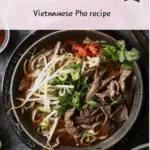
Why You’ll Love Vietnamese Pho Recipe Recipe
-
Rich and aromatic broth: Beef bones, brisket, star anise, cinnamon, and ginger create a deeply satisfying broth with layers of savory flavor.
-
Authentic Vietnamese flavors: Traditional spices, fish sauce, and fresh herbs give this Pho its distinctive taste and aroma.
-
Tender and flavorful beef: Slow-cooked brisket becomes incredibly tender, while thinly sliced beef tenderloin cooks gently in the hot broth.
-
Customizable toppings: Everyone can personalize their bowl with fresh herbs, bean sprouts, lime, chili, hoisin sauce, and Sriracha.
-
Perfect for family meals: This recipe makes six generous servings, making it ideal for sharing with family or friends.
-
Great for meal preparation: The broth can be made ahead of time and stored for convenient meals throughout the week.
-
Naturally comforting: Warm broth, soft noodles, and fragrant spices make this dish especially enjoyable during colder weather.
Ingredients
(Tip: You’ll find the full list of ingredients and measurements in the recipe card below.)
For the Aromatics and Spices
-
2 large onions, halved
-
150g (5 oz) fresh ginger, sliced lengthwise
-
10 star anise
-
4 cinnamon sticks
-
4 cardamom pods
-
3 whole cloves
-
1½ tablespoons coriander seeds
For the Beef Broth
-
1.5kg (3 lb) beef brisket
-
1kg (2 lb) meaty beef bones
-
1kg (2 lb) beef marrow bones, cut to expose the marrow
-
3.5 liters (3.75 quarts or approximately 15 cups) water
-
2 tablespoons white sugar
-
1 tablespoon salt
-
40ml (3 tablespoons) fish sauce
For the Pho Noodle Bowls
-
50g (1.5 oz) dried rice noodles per serving, or 120g (4 oz) fresh rice noodles
-
30g (1 oz) raw beef tenderloin per serving, very thinly sliced
-
3–5 slices of cooked brisket per serving
For Serving and Garnishing
-
Fresh bean sprouts
-
3–5 sprigs Thai basil
-
3–5 sprigs fresh coriander or cilantro
-
Fresh lime wedges
-
Finely sliced red chili
-
Hoisin sauce
-
Sriracha sauce
Directions
Step 1: Char the Onions and Ginger
Heat a heavy-bottomed skillet over high heat without adding any oil.
Place the halved onions and sliced ginger into the hot skillet, cut sides facing down. Allow them to cook for several minutes until the surfaces develop dark, charred patches.
Turn the onions and ginger occasionally to char the other sides.
Once they become fragrant and lightly blackened, remove them from the skillet and set aside.
Charring these aromatics is an essential step because it adds depth, sweetness, and a subtle smoky flavor to the Pho broth.
Step 2: Toast the Whole Spices
Place the star anise, cinnamon sticks, cardamom pods, cloves, and coriander seeds into a dry skillet.
Toast over medium-high heat for approximately 3 minutes, stirring frequently to prevent burning.
The spices should become noticeably fragrant as their natural oils are released.
Remove the spices from the heat and set them aside.
Toasting the spices enhances their aroma and helps create the distinctive fragrance associated with traditional Vietnamese Pho.
Step 3: Clean the Beef Bones and Brisket
Rinse the beef brisket, meaty beef bones, and marrow bones thoroughly under cold running water.
Transfer everything to a large stockpot and add enough water to cover the meat and bones.
Bring the water to a rolling boil and cook for approximately 5 minutes.
During this process, foam and impurities will rise to the surface.
Drain the pot completely, discarding the boiling water.
Rinse each bone and the brisket under running water to remove any remaining residue.
Wash the stockpot thoroughly before continuing.
This blanching process is important for producing a cleaner, clearer broth with a more refined flavor.
Step 4: Prepare the Pho Broth
Return the cleaned stockpot to the stove and pour in 3.5 liters of fresh water.
Bring the water to a boil.
Carefully add the cleaned beef bones and brisket, followed by the charred onions and ginger.
Add the toasted spices, white sugar, and salt.
The water should just barely cover the ingredients. Use a sufficiently large stockpot to accommodate everything comfortably.
Reduce the heat to low and cover the pot with a lid.
Allow the broth to simmer gently for approximately 3 hours.
Avoid vigorous boiling, which can make the broth cloudy and affect its delicate flavor.
During cooking, occasionally skim away any foam or excess fat that rises to the surface.
Step 5: Remove the Cooked Brisket
After approximately 3 hours, check the beef brisket for tenderness.
It should be soft and easy to slice, with a rich beef flavor developed from the long cooking process.
Carefully remove the brisket from the broth and transfer it to a plate.
Allow it to cool slightly before refrigerating it until needed.
Cooling the brisket makes it easier to cut into neat, thin slices for serving.
Keep the bones, spices, and aromatics in the stockpot.
Step 6: Continue Simmering the Broth
Leave the stockpot uncovered and continue simmering the remaining broth for another 40 minutes.
This additional cooking time concentrates the beef flavor and allows the spices to develop further.
Once finished, carefully strain the broth through a fine-mesh strainer into another clean pot.
Discard the bones, onions, ginger, and whole spices.
You should have approximately 2.5 liters (10 cups) of finished broth.
If you have significantly more liquid, simmer it uncovered until it reduces to the desired quantity.
Step 7: Season the Broth
Add the fish sauce to the strained broth and stir well.
Taste carefully and adjust the seasoning with additional salt or sugar if necessary.
The finished broth should taste rich and beefy, with a pleasant balance of savory flavors, aromatic spices, and a very subtle sweetness.
The fish sauce provides the distinctive umami flavor that makes Vietnamese Pho especially delicious.
Keep the broth very hot while preparing the noodles and beef.
Step 8: Prepare the Rice Noodles
Cook the rice noodles according to the package instructions.
If using dried rice noodles, they may need soaking before cooking, depending on their thickness.
Fresh rice noodles generally require only a brief dip in hot water.
Drain the noodles thoroughly once they are tender.
Avoid overcooking them, as they will continue softening when the hot broth is added.
Divide the noodles evenly among six large serving bowls.
Step 9: Add the Beef
Remove the cooked brisket from the refrigerator and slice it thinly against the grain.
Arrange several slices of brisket over the noodles in each bowl.
Next, add the very thinly sliced raw beef tenderloin.
For the best texture, slice the tenderloin as thinly as possible. Briefly chilling the meat in the freezer can make slicing easier.
Spread the beef slices across the noodles so the hot broth can reach them evenly.
Step 10: Pour the Hot Broth and Serve
Bring the finished broth to a full boil immediately before serving.
Carefully ladle approximately 400ml (14 fl oz) of piping-hot broth into each prepared bowl.
The heat of the broth will begin cooking the thinly sliced raw beef.
For fully cooked beef, briefly cook the tenderloin slices in the boiling broth before transferring them to the bowls.
Serve immediately with fresh bean sprouts, Thai basil, cilantro, lime wedges, and sliced red chili on the side.
Offer hoisin sauce and Sriracha so everyone can adjust the sweetness and spiciness according to their preferences.
Enjoy your homemade Vietnamese Pho while it is hot and fragrant.
Servings and Timing
Servings
6
Generous bowls
Prep time
20 min
Approximate
Cook time
3 hr 50 min
Including broth simmering
Total time
4 hr 10 min
Approximately
The total time accounts for the initial preparation, blanching, and extended broth simmering. Most of the cooking is hands-off, making this recipe manageable despite its longer preparation time.
Variations
1. Chicken Pho (Pho Ga)
Replace the beef brisket and bones with a whole chicken or bone-in chicken pieces.
Prepare a fragrant chicken broth using ginger, onions, and a lighter combination of spices.
Shred the cooked chicken and serve it with rice noodles, fresh herbs, and lime wedges.
This variation has a lighter flavor while maintaining the comforting qualities of traditional Pho.
2. Spicy Vietnamese Pho
For those who enjoy extra heat, add more fresh red chili or Sriracha sauce to the finished bowls.
You can also incorporate a small amount of chili oil for additional richness.
Adjust the spice level gradually to avoid overpowering the delicate broth.
3. Vegetarian Pho
Replace the beef bones and brisket with a combination of mushrooms, carrots, onions, and vegetable broth.
Use soy sauce or a vegetarian fish sauce alternative instead of traditional fish sauce.
Shiitake mushrooms are particularly useful because they contribute a deep, savory flavor.
Top with tofu, fresh herbs, and bean sprouts for a satisfying meat-free version.
4. Extra Beef Pho
For a heartier bowl, add additional cuts of beef such as flank steak, beef shank, or thinly sliced sirloin.
You can also include cooked beef meatballs for extra texture and protein.
Different beef cuts create a more substantial and varied eating experience.
5. Low-Carb Pho
Replace traditional rice noodles with zucchini noodles or shirataki noodles.
Keep the aromatic beef broth, tender meat, and fresh garnishes unchanged.
This variation offers the familiar flavors of Pho with fewer carbohydrates.
6. Mushroom and Beef Pho
Add sliced shiitake, oyster, or button mushrooms to the hot broth during the final minutes of cooking.
The mushrooms absorb the flavorful broth and add an earthy taste that complements the beef.
This is an easy way to introduce more vegetables without significantly changing the traditional recipe.
Storage/Reheating
Refrigerating Vietnamese Pho
For the best results, store the broth, noodles, cooked beef, and fresh toppings separately.
Allow the broth to cool promptly, then transfer it to airtight containers and refrigerate within two hours of cooking.
The broth can be stored in the refrigerator for 3–4 days.
Cooked brisket should also be refrigerated in a sealed container and used within 3–4 days.
Cooked rice noodles are best enjoyed fresh, but leftovers can be refrigerated separately for 1–2 days for optimal texture.
Keep raw beef refrigerated separately and follow its original use-by date.
Freezing Pho Broth
Pho broth freezes exceptionally well, making it ideal for preparing meals in advance.
Allow the broth to cool completely in the refrigerator before transferring it to freezer-safe containers.
Leave a little space at the top of each container to allow for expansion.
Freeze the broth for up to 3 months for the best flavor and quality.
Cooked brisket can also be frozen separately in airtight freezer bags or containers.
Avoid freezing assembled Pho bowls because rice noodles and fresh herbs can lose their texture after thawing.
Reheating Vietnamese Pho
To reheat, pour the refrigerated broth into a saucepan and bring it to a rolling boil.
Warm the cooked brisket in the hot broth until thoroughly heated.
Prepare fresh rice noodles or briefly warm refrigerated noodles in hot water.
Place the noodles and beef in a serving bowl, then ladle the boiling broth over everything.
Add fresh bean sprouts, herbs, lime, and sauces immediately before serving.
If using raw beef slices, make sure the broth is hot enough to cook them, or cook them directly in the boiling broth until they reach your preferred safe doneness.
Tips for Maintaining Freshness
Always store the broth separately from the noodles to prevent them from becoming overly soft.
Remove excess solidified fat from the chilled broth if you prefer a lighter soup.
Avoid repeatedly reheating the entire batch. Instead, warm only the portion you plan to eat.
Fresh herbs, lime wedges, and bean sprouts should be added just before serving to preserve their flavor and crisp texture.
FAQs
1. What is Vietnamese Pho?
Vietnamese Pho is a traditional Vietnamese noodle soup made with aromatic broth, flat rice noodles, meat, and fresh herbs. Beef Pho, also known as Pho Bo, typically features a broth prepared from beef bones, onions, ginger, and whole spices such as star anise and cinnamon. It is commonly served with lime, bean sprouts, herbs, and chili.
2. What makes Pho broth so flavorful?
The signature flavor of Pho comes from slowly simmering beef bones and meat with charred onions, ginger, and fragrant spices. Star anise, cinnamon, cardamom, cloves, and coriander seeds provide warmth and complexity, while fish sauce adds savory depth. The extended simmering time allows these ingredients to develop a rich and balanced broth.
3. Why do you need to blanch the beef bones before making Pho?
Blanching removes blood, foam, and other impurities from the beef bones and meat. This step helps produce a clearer broth with a cleaner taste. After boiling the bones briefly, the water is discarded, and the bones are rinsed before being simmered in fresh water.
4. Can I make Vietnamese Pho without beef bones?
Yes, although beef bones contribute significantly to the traditional broth’s richness and depth. If bones are unavailable, you can use a high-quality beef stock and simmer it with charred onions, ginger, and toasted spices. The resulting soup will still be flavorful, but it may not have the same body and complexity as bone-based Pho.
5. What type of noodles are best for Vietnamese Pho?
Flat rice noodles are the traditional choice for Pho. They are commonly available dried or fresh and come in different widths. Medium-width rice noodles are particularly popular because they hold their shape well while absorbing the broth’s flavor. Avoid overcooking them, as they can become mushy.
6. Can I make Pho broth ahead of time?
Yes, Pho broth is excellent for making ahead. In fact, refrigerating the broth overnight can make it easier to remove excess fat from the surface. Prepare the broth, cool it promptly, and store it in the refrigerator for up to 3–4 days. Reheat it thoroughly before assembling the noodle bowls.
7. Why is raw beef added to Pho?
Thinly sliced raw beef is traditionally placed over the noodles so that the extremely hot broth cooks it as the soup is assembled. This technique produces tender beef with a delicate texture. However, the broth may not always cook the meat completely, so anyone who prefers fully cooked beef should briefly cook the slices in boiling broth before serving.
8. How can I make my Pho broth clearer?
To achieve a clear broth, blanch and rinse the beef bones before beginning the main cooking process. Keep the broth at a gentle simmer rather than a vigorous boil, and regularly skim away foam and impurities. Straining the finished broth through a fine-mesh strainer also helps remove small particles.
9. What toppings are traditionally served with Vietnamese Pho?
Common Pho toppings include fresh bean sprouts, Thai basil, cilantro, lime wedges, and sliced chili peppers. Hoisin sauce and Sriracha are also popular accompaniments in many restaurants, particularly for southern-style presentations. These additions allow diners to customize the soup’s freshness, sweetness, acidity, and heat.
10. Can I freeze homemade Vietnamese Pho?
Yes, the broth is especially suitable for freezing. Store cooled broth in airtight, freezer-safe containers for up to 3 months for optimal quality. Cooked brisket can be frozen separately. For the best results, prepare fresh rice noodles and garnishes when serving rather than freezing the fully assembled soup.
Conclusion
Homemade Vietnamese Pho is a delicious combination of rich beef broth, tender meat, delicate rice noodles, and fresh aromatic herbs. Its distinctive flavor comes from carefully prepared ingredients, toasted spices, charred aromatics, and the slow simmering process that transforms simple beef bones into a deeply satisfying soup.
Although preparing authentic-style Pho takes time, the process is straightforward, and the results are well worth the effort. Each bowl offers a wonderful balance of savory richness, gentle sweetness, warming spices, and refreshing garnishes.
Whether you’re preparing a comforting family dinner, exploring Vietnamese cuisine, or making a large batch of flavorful broth for future meals, this Vietnamese Pho recipe is a rewarding addition to your home cooking collection. Serve it steaming hot with plenty of fresh herbs, lime, and your favorite sauces for a satisfying, restaurant-style experience at home.
Vietnamese Pho Recipe – Authentic, Rich, and Flavorful Beef Noodle Soup

Authentic Vietnamese Beef Pho features a rich, aromatic broth simmered with beef bones, tender brisket, charred ginger, onions, and warming spices. Served with silky rice noodles, thinly sliced beef, fresh herbs, and vibrant toppings, this comforting noodle soup is packed with traditional Vietnamese flavor.
- Prep Time: 20 minutes
- Cook Time: 4 hours
- Total Time: 4 hours 20 minutes
- Yield: 6 servings
- Category: Main Course, Soup
- Method: Stovetop, Slow Simmer
- Cuisine: Vietnamese
- Diet: Low Lactose
Ingredients
- 2 large onions, halved
- 150g / 5oz ginger, sliced lengthwise down the center
- 10 star anise
- 4 cinnamon quills
- 4 cardamom pods
- 3 whole cloves
- 1.5 tbsp coriander seeds
- 1.5kg / 3lb beef brisket
- 1kg / 2lb meaty beef bones
- 1kg / 2lb marrow bones (leg or knuckle), cut to expose marrow
- 3.5 litres / 3.75 quarts water (15 cups)
- 2 tbsp white sugar
- 1 tbsp salt
- 40 ml / 3 tbsp fish sauce
- 50g / 1.5oz dried rice sticks (or 120g / 4oz fresh), per serving
- 30g / 1oz raw beef tenderloin, very thinly sliced, per serving
- 3–5 slices cooked brisket, per serving
- A handful of bean sprouts, per serving
- 3–5 sprigs Thai basil, per serving
- 3–5 sprigs coriander/cilantro, per serving (or additional basil)
- Lime wedges, for serving
- Finely sliced red chili, for serving
- Hoisin sauce, optional
- Sriracha sauce, optional
Instructions
- Char the aromatics: Heat a heavy-based skillet over high heat without oil until smoking hot. Place the halved onions and sliced ginger cut-side down in the skillet. Cook for several minutes until deeply charred, then turn to char the other sides. Remove and set aside.
- Toast the spices: Add the star anise, cinnamon quills, cardamom pods, cloves, and coriander seeds to a dry skillet. Toast over medium-high heat for approximately 3 minutes until fragrant. Set aside.
- Blanch the beef and bones: Rinse the beef brisket, meaty beef bones, and marrow bones. Place them in a large stockpot and cover with water. Bring to a boil and cook for 5 minutes to release impurities. Drain completely and rinse each bone and the brisket thoroughly under running water.
- Start the broth: Clean the stockpot and add 3.5 litres / 3.75 quarts of fresh water. Bring to a boil. Add the cleaned beef bones, marrow bones, and brisket, followed by the charred onions, ginger, toasted spices, sugar, and salt. The water should barely cover the ingredients.
- Simmer the broth: Cover the pot with a lid, reduce the heat to low, and gently simmer for 3 hours. Maintain a gentle simmer rather than a vigorous boil to help keep the broth clear.
- Remove the brisket: After 3 hours, carefully remove the brisket. It should be very tender. Allow it to cool, then refrigerate until ready to slice and serve.
- Concentrate the broth: Continue simmering the remaining broth uncovered for another 40 minutes to develop a richer flavor.
- Strain and season: Strain the broth into a clean pot, discarding the bones, onions, ginger, and spices. You should have approximately 2.5 litres / 2.65 quarts (10 cups) of broth. If significantly more remains, simmer to reduce. Stir in the fish sauce and adjust the salt and sugar to taste. The broth should be deeply beefy, aromatic, savory, and subtly sweet.
- Prepare the noodles: Just before serving, cook or soak the rice noodles according to the package instructions. Drain thoroughly and divide among six large serving bowls.
- Add the beef: Thinly slice the chilled cooked brisket. Arrange 3–5 slices of brisket and approximately 30g / 1oz of very thinly sliced raw beef tenderloin over the noodles in each bowl.
- Add the hot broth: Bring the broth to a vigorous boil. Immediately ladle approximately 400ml / 14oz of piping-hot broth over the beef and noodles in each bowl. The heat of the broth will cook the thinly sliced raw beef.
- Serve: Serve immediately with bean sprouts, Thai basil, cilantro, lime wedges, sliced red chili, hoisin sauce, and Sriracha on the side. Allow everyone to customize their pho with their favorite toppings.
Notes
- Clear broth: Blanching and thoroughly rinsing the beef bones and brisket before simmering helps remove impurities and produces a cleaner, clearer broth.
- Charred aromatics: Charring the onions and ginger adds smoky depth and complexity to the broth. Do not skip this step.
- Fish sauce: Use a good-quality Vietnamese fish sauce for authentic savory flavor. Add it toward the end of cooking and adjust to taste.
- Rice noodles: Dried and fresh rice noodles require different preparation methods. Follow the package instructions and avoid overcooking.
- Raw beef: Slice the tenderloin paper-thin so the boiling broth cooks it quickly. For fully cooked beef, briefly blanch the slices in boiling broth before serving.
- Broth consistency: The finished broth should measure approximately 2.5 litres (10 cups). Reduce excess liquid if necessary to concentrate the flavor.
- Serving suggestions: Serve with fresh bean sprouts, Thai basil, cilantro, lime wedges, red chili, hoisin sauce, and Sriracha. Add sauces gradually so they do not overpower the broth.
- Make ahead: Prepare the broth one day in advance and refrigerate overnight. Remove the hardened fat from the surface if desired, then reheat thoroughly before serving.
- Storage: Refrigerate leftover broth and cooked brisket in airtight containers for up to 3–4 days. Store noodles and fresh toppings separately.
- Freezing: Freeze cooled broth in airtight freezer-safe containers for up to 3 months. Thaw in the refrigerator and bring to a boil before serving.
- Gluten-free option: Use gluten-free rice noodles, certified gluten-free fish sauce, and gluten-free hoisin and chili sauces if needed.
- Timing: The detailed cooking directions require approximately 3 hours and 40 minutes of broth simmering, plus preparation and blanching, so the actual total time is longer than the originally stated 3 hours and 20 minutes.
- Nutrition: Nutritional values are approximate per serving and depend on the amount of brisket, marrow fat, noodles, and optional sauces consumed.
Nutrition
- Serving Size: 1 large bowl (approximately 400 ml broth with noodles and beef)
- Calories: 580 kcal
- Sugar: 9 g
- Sodium: 1450 mg
- Fat: 25 g
- Saturated Fat: 10 g
- Unsaturated Fat: 13 g
- Trans Fat: 0.8 g
- Carbohydrates: 43 g
- Fiber: 2 g
- Protein: 45 g
- Cholesterol: 125 mg