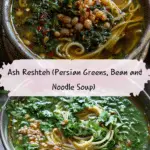
Why You’ll Love Ash Reshteh Recipe
Ash Reshteh is more than an ordinary vegetable soup. Its combination of fresh herbs, legumes, noodles, and flavorful garnishes makes it a complete and satisfying meal.
-
Packed with nutritious ingredients: Spinach, parsley, cilantro, dill, chickpeas, beans, and lentils provide fiber, plant-based protein, and essential nutrients.
-
Rich and comforting: The thick, stew-like consistency makes this soup especially satisfying on chilly evenings.
-
Authentic Persian flavors: Turmeric, fresh herbs, tangy kashk, and mint-infused oil create a distinctive balance of earthy, savory, and refreshing flavors.
-
Perfect for feeding a crowd: With approximately 10 servings, this recipe is ideal for family dinners, celebrations, or meal preparation.
-
Easy to customize: You can make this soup vegetarian, adjust its thickness, or experiment with different beans and herbs.
-
Delicious leftovers: The flavors continue to develop as the soup rests, making it an excellent make-ahead dish.
One of the best things about Ash Reshteh is how simple ingredients come together to create something deeply flavorful and memorable.
Ingredients
Making authentic Ash Reshteh requires a generous amount of fresh greens, several varieties of legumes, Persian noodles, and a few flavorful garnishes.
(Tip: You’ll find the full list of ingredients and measurements in the recipe card below.)
For the Soup
-
¼ cup dried chickpeas
-
¼ cup dried white beans, such as navy or cannellini beans
-
Fine sea salt, to taste
-
Freshly ground black pepper, to taste
-
2 pounds fresh spinach
-
1 pound fresh cilantro (approximately 3 large bunches)
-
1 pound Italian parsley (approximately 3 large bunches)
-
2 large bunches fresh dill
-
1 large bunch fresh chives
-
About 20 large fresh mint leaves
-
4 tablespoons extra-virgin olive oil
-
1 large yellow onion, finely chopped
-
2 garlic cloves, minced
-
1 cup dried green or brown lentils
-
½ teaspoon ground turmeric
-
2 quarts chicken stock, beef stock, or water
-
1½ cups liquid kashk
-
8 ounces reshteh (Persian soup noodles)
For the Garnishes
-
2 tablespoons extra-virgin olive oil
-
1 large yellow onion, thinly sliced
-
⅓ cup extra-virgin olive oil
-
1 tablespoon dried mint
-
½ cup liquid kashk, thinned with a little water
-
Additional salt, as needed
Ingredient Notes
Reshteh noodles: These traditional Persian noodles are slightly salty and have a firm, chewy texture. They help thicken the soup while adding substance.
Kashk: This tangy fermented dairy ingredient gives Ash Reshteh its characteristic flavor. Liquid kashk is ideal, although diluted thick yogurt can be used as an alternative when necessary. The flavor will be different.
Fresh herbs: Using generous quantities of cilantro, parsley, dill, chives, and mint is essential for achieving the soup’s distinctive herbal flavor.
Beans and lentils: Chickpeas and white beans contribute a creamy, tender texture, while lentils add body and earthy richness.
Turmeric: A small amount of turmeric provides warm, earthy notes and complements the greens beautifully.
Directions
Follow these steps to prepare a flavorful, traditional Ash Reshteh with tender legumes, perfectly cooked noodles, and aromatic garnishes.
Step 1: Soak the Chickpeas and White Beans
The night before cooking, place the dried chickpeas and white beans in a medium mixing bowl.
Add a generous pinch of salt and approximately 2 cups of water, ensuring the legumes are completely submerged.
Cover the bowl and refrigerate overnight. Soaking helps hydrate the beans and encourages more even cooking.
When ready to prepare the soup, drain the beans and discard the soaking water.
Step 2: Prepare the Fresh Greens and Herbs
Thoroughly wash the spinach, cilantro, parsley, dill, chives, and fresh mint leaves.
Use a salad spinner or clean kitchen towels to remove excess moisture.
Roughly chop the spinach into large pieces. Trim the tough stems from the cilantro, parsley, and dill, keeping the tender stems and leaves.
Finely chop the cilantro, parsley, dill, chives, and mint into small pieces, approximately ¼ inch or smaller.
If preparing the herbs ahead of time, store them in sealed bags or airtight containers in the refrigerator overnight.
Step 3: Sauté the Onion and Garlic
Place a large Dutch oven or stockpot, preferably with a capacity of at least 10 quarts, over medium heat.
Add 4 tablespoons of olive oil.
Once the oil begins to shimmer, add the finely chopped yellow onion and a generous pinch of salt.
Cook for approximately 16–18 minutes, stirring regularly, until the onion becomes tender and golden brown.
Add the minced garlic and continue cooking for another minute, stirring constantly to prevent burning.
This aromatic base adds depth and sweetness to the finished soup.
Step 4: Add the Legumes and Seasonings
Add the drained chickpeas and white beans to the pot.
Stir in the dried lentils, ground turmeric, and approximately 1 teaspoon of freshly ground black pepper.
Cook for 2 minutes, stirring frequently so the legumes become coated with the fragrant oil and seasonings.
Step 5: Add the Greens and Simmer
Add the chopped spinach and prepared fresh herbs to the pot.
Pour in the chicken stock, beef stock, or water and stir thoroughly.
Partially cover the pot with a lid and bring the mixture to a boil.
Once boiling, reduce the heat and allow the soup to simmer gently for approximately 1 hour.
Stir regularly to prevent the greens and legumes from sticking to the bottom of the pot.
As the greens cook, they will wilt significantly and release moisture.
If the mixture appears excessively thick, add 1–2 cups of water until it reaches a more manageable consistency.
Step 6: Incorporate the Kashk
Place 1½ cups of liquid kashk in a medium bowl.
Add one or two ladles of hot soup and whisk until the mixture becomes smooth.
Slowly pour the tempered kashk mixture back into the soup, stirring to combine.
The soup will gradually change from a bright green color to a softer, creamy green.
Increase the heat and bring the mixture back to a gentle boil.
Step 7: Cook the Persian Noodles
Break the reshteh noodles in half and add them directly to the soup.
Stir gently to distribute the noodles evenly and prevent them from clumping together.
Reduce the heat and simmer for approximately 30 minutes, stirring occasionally.
The noodles should become tender and slightly chewy, while the chickpeas and beans should be completely cooked.
If the legumes are still firm, continue simmering until tender, adding a little hot water when necessary.
Step 8: Prepare the Caramelized Onion Garnish
While the noodles cook, place a medium frying pan over medium-high heat.
Add 2 tablespoons of olive oil.
Once the oil is hot, add the thinly sliced onion and a generous pinch of salt.
Cook for approximately 16–18 minutes, stirring regularly, until the onion becomes deeply golden and caramelized.
Transfer the cooked onion to a paper towel-lined plate to absorb excess oil.
Allow it to cool slightly while preparing the remaining garnishes.
Step 9: Make the Mint Oil
Wipe the frying pan clean and return it to low heat.
Add the remaining ⅓ cup of olive oil and warm gently.
Stir in the dried mint, then immediately remove the pan from the heat.
Allow the mint to steep in the warm oil for at least 5 minutes.
Avoid overheating the mint, as it can burn quickly and develop a bitter flavor.
Step 10: Prepare the Kashk Drizzle
Place the remaining ½ cup of liquid kashk in a small bowl.
Add a few tablespoons of water and whisk until it reaches the consistency of thin yogurt.
This mixture will be used as a decorative and flavorful finishing drizzle.
Step 11: Adjust the Soup’s Consistency
Once the noodles and beans are fully cooked, check the soup’s thickness.
Traditional Ash Reshteh should have a rich, hearty consistency similar to thick chili.
If the soup is too thick, gradually add water in ½-cup increments until the desired consistency is achieved.
Taste and adjust the seasoning with additional salt and pepper if necessary.
Remember that both reshteh noodles and kashk can be naturally salty, so season carefully.
Step 12: Garnish and Serve
Ladle the hot Ash Reshteh into individual serving bowls.
Drizzle each portion with the prepared kashk and fragrant mint oil.
Finish with a generous sprinkling of caramelized onions.
Serve immediately while warm, allowing everyone to enjoy the rich flavors and satisfying texture of this traditional Persian soup.
Servings and timing
Servings
10 portions
Total active-day time
2 hours 45 minutes
Preparation time
Approximately 30 minutes
Cooking time
Approximately 2 hours 15 minutes
Bean soaking time
8–12 hours (overnight)
Difficulty
Moderate
The preparation and cooking times are approximate, and actual cooking time may vary depending on the age and variety of the dried beans. Overnight soaking is not included in the 2-hour, 45-minute total.
Ash Reshteh works beautifully as a complete meal because it contains vegetables, legumes, and noodles. For a lighter meal, serve smaller portions alongside fresh herbs, radishes, or a simple cucumber salad.
Variations
Although traditional Ash Reshteh has a distinctive combination of ingredients, several variations can accommodate different preferences and dietary needs.
1. Vegetarian Ash Reshteh
Replace chicken or beef stock with vegetable broth or water.
The combination of herbs, legumes, turmeric, and kashk provides plenty of flavor without meat-based stock.
For a vegan version, use a plant-based alternative to kashk and ensure the noodles contain no eggs or dairy.
2. Extra Creamy Ash Reshteh
For a richer consistency, increase the amount of kashk slightly or mash a small portion of the cooked beans against the side of the pot.
Stir the mashed beans back into the soup to create a naturally creamy texture without adding heavy cream.
3. Spicy Persian Noodle Soup
Traditional Ash Reshteh is generally mild, but you can introduce a little heat by adding crushed red pepper flakes or a pinch of cayenne pepper.
Start with a small quantity so the spices do not overpower the fresh herbs.
4. Ash Reshteh With Different Beans
If white beans are unavailable, substitute another mild bean variety, such as great northern beans or additional chickpeas.
Keep in mind that different beans may require different cooking times.
5. Gluten-Free Ash Reshteh
Replace traditional reshteh noodles with a suitable gluten-free noodle.
Choose a variety that holds its shape during simmering, and adjust the cooking time according to the package instructions.
Because gluten-free noodles can become soft quickly, add them closer to the end of cooking.
6. Lighter Ash Reshteh
For a lighter version, reduce the amount of oil used in the garnishes.
You can also use slightly less kashk or increase the amount of broth for a thinner soup.
The result will still be flavorful while having a less rich consistency.
7. Extra Herb-Flavored Ash Reshteh
If you enjoy intensely herbal soups, add extra parsley, cilantro, or dill.
Fresh herbs are central to the character of this dish, so increasing their quantity can enhance its refreshing, aromatic qualities.
Maintain a balanced combination rather than relying too heavily on one herb.
Storage/Reheating
Ash Reshteh stores well, making it an excellent recipe for preparing ahead of time or enjoying throughout the week.
Refrigerating
Allow the soup to cool slightly before transferring it to shallow, airtight containers.
Refrigerate promptly, within 2 hours of cooking.
Properly stored Ash Reshteh will keep in the refrigerator for approximately 3–4 days.
The noodles continue absorbing liquid during storage, so the soup will naturally become thicker.
For the best results, store caramelized onions, mint oil, and additional kashk separately from the soup.
Freezing
Ash Reshteh can be frozen for approximately 2–3 months for the best quality.
However, noodles may soften after thawing, and the dairy-based kashk can sometimes change texture.
For optimal results, freeze the soup base before adding the noodles and kashk whenever possible.
When ready to serve, thaw the soup in the refrigerator, reheat it thoroughly, and add freshly cooked noodles and kashk.
If freezing fully prepared soup, use freezer-safe containers and leave some space for expansion.
Reheating on the Stovetop
Transfer the desired amount of soup to a saucepan or stockpot.
Add a splash of water or broth to loosen the consistency.
Warm over medium-low heat, stirring frequently, until the soup is steaming hot throughout and reaches 165°F (74°C).
Avoid prolonged boiling, which can cause the noodles to become overly soft.
Add fresh garnishes just before serving.
Reheating in the Microwave
Place an individual portion in a microwave-safe bowl.
Add a tablespoon or two of water, depending on the thickness.
Cover loosely and heat in short intervals, stirring between each interval until thoroughly heated.
Finish with reserved kashk, mint oil, and caramelized onions.
Make-Ahead Tips
To simplify preparation, soak the chickpeas and white beans the night before.
Wash and chop the herbs in advance, then store them in airtight containers in the refrigerator.
You can also prepare the caramelized onions ahead of time and refrigerate them separately.
These small preparations make the cooking process easier, especially when preparing Ash Reshteh for a large gathering.
FAQs
1. What is Ash Reshteh?
Ash Reshteh is a traditional Iranian soup made with fresh herbs, leafy greens, legumes, Persian noodles, and kashk. It has a thick, hearty consistency and is typically garnished with caramelized onions, mint oil, and additional kashk. It is especially popular during family gatherings, holidays, and colder seasons.
2. What does Ash Reshteh taste like?
Ash Reshteh has a rich, earthy, and herbaceous flavor. The combination of parsley, cilantro, dill, spinach, and mint creates a fresh aromatic base, while beans and lentils contribute mild, nutty notes. Kashk adds a tangy, savory finish, and caramelized onions provide sweetness that balances the overall dish.
3. What is kashk, and can I substitute it?
Kashk is a traditional Persian fermented dairy product made from yogurt or whey. It has a tangy, salty flavor and is commonly used in Iranian cooking. If kashk is unavailable, plain thick yogurt diluted with water can work as a substitute, although it will not reproduce the same distinctive flavor. Add yogurt gently over low heat to reduce the risk of curdling.
4. Can I make Ash Reshteh without Persian noodles?
Yes. Although traditional reshteh noodles are ideal, you can substitute linguine, fettuccine, or another sturdy wheat noodle. Break longer noodles into smaller pieces before adding them to the soup. Because reshteh noodles are typically salted, you may need to adjust the seasoning when using another type of pasta.
5. Is Ash Reshteh vegetarian or vegan?
Ash Reshteh can easily be made vegetarian by using vegetable broth or water instead of meat-based stock. Traditional kashk contains dairy, so the soup is not vegan when prepared with this ingredient. To make a vegan version, replace kashk with a tangy plant-based alternative and verify that the noodles contain no animal-derived ingredients.
6. Why is my Ash Reshteh too thick?
Ash Reshteh naturally thickens because beans, lentils, and noodles absorb liquid during cooking. The soup may become even thicker as it cools. If the consistency is too dense, gradually add warm water or broth, stirring until it reaches a thick but spoonable texture. Traditional Ash Reshteh should be hearty rather than watery.
7. Can I use canned beans instead of dried beans?
Yes. Canned chickpeas and white beans can save preparation time. Drain and rinse them thoroughly before adding them to the soup. Because canned beans are already cooked, add them later in the cooking process to prevent them from becoming mushy. The lentils will still need sufficient simmering time to become tender.
8. Can I prepare Ash Reshteh ahead of time?
Absolutely. Ash Reshteh is an excellent make-ahead recipe because its flavors continue to develop as it rests. Prepare the soup a day in advance, refrigerate it properly, and reheat gently before serving. Add a little broth or water to restore the consistency, and prepare or refresh the garnishes just before serving.
9. What can I serve with Ash Reshteh?
Ash Reshteh is filling enough to serve as a complete meal. However, it also pairs beautifully with warm flatbread, fresh herbs, sliced radishes, cucumber salad, or a simple platter of fresh vegetables. Traditional Persian bread, such as lavash or sangak, is particularly delicious alongside the thick soup.
10. How do I prevent the noodles from sticking together?
Break the noodles into shorter pieces before adding them to the boiling soup. Stir gently immediately after adding them, making sure they are evenly distributed throughout the pot. Continue stirring occasionally as they cook. Maintaining enough liquid in the soup also helps prevent the noodles from clumping or sticking to the bottom.
Conclusion
Ash Reshteh is a comforting and flavorful Persian soup that celebrates the richness of fresh herbs, wholesome legumes, tender noodles, and traditional seasonings. Its thick consistency, vibrant green color, and distinctive tangy flavor make it a memorable dish for both everyday meals and special occasions.
Although preparing the herbs and soaking the beans requires some planning, the cooking process is straightforward and rewarding. The combination of slowly simmered greens, aromatic turmeric, creamy kashk, caramelized onions, and fragrant mint oil creates layers of flavor that make every spoonful satisfying.
Whether you’re preparing a large family dinner, exploring traditional Iranian cuisine, or looking for a nourishing soup to enjoy throughout the week, this homemade Ash Reshteh recipe is a wonderful choice. Serve it warm with generous garnishes and fresh bread for an authentic Persian-inspired meal that is both hearty and delicious.
Ash Reshteh (Persian Greens, Bean and Noodle Soup)

Ash Reshteh is a traditional Persian soup brimming with fresh spinach, fragrant herbs, tender beans, lentils, and hearty noodles. Finished with tangy kashk, caramelized onions, and aromatic mint oil, this comforting soup is rich, nourishing, and full of flavor.
- Prep Time: 45 minutes
- Cook Time: 2 hours
- Total Time: 2 hours 45 minutes
- Yield: 10 servings
- Category: Soup
- Method: Stovetop
- Cuisine: Persian
- Diet: Vegetarian
Ingredients
- ¼ cup dried chickpeas
- ¼ cup dried white beans, such as navy or cannellini
- Fine sea salt and freshly ground black pepper, to taste
- 2 pounds spinach
- 1 pound cilantro (about 3 large bunches)
- 1 pound Italian parsley (about 3 large bunches)
- 2 large bunches dill
- 1 large bunch chives
- About 20 large fresh mint leaves
- 6 tablespoons plus ⅓ cup extra-virgin olive oil, divided
- 2 large yellow onions, 1 finely chopped and 1 thinly sliced
- 2 garlic cloves, minced
- 1 cup dried green or brown lentils
- ½ teaspoon ground turmeric
- 2 quarts chicken or beef stock (preferably homemade), or water
- 1 ½ cups liquid kashk (Persian sun-dried yogurt or whey), plus ½ cup for serving
- 8 ounces reshteh (Persian soup noodles)
- 1 tablespoon dried mint
Instructions
- Soak the beans: The night before cooking, place the dried chickpeas and white beans in a medium bowl. Add a generous pinch of salt and 2 cups water. Cover and refrigerate overnight.
- Prepare the greens and herbs: Wash the spinach, cilantro, and parsley thoroughly, then dry well using a salad spinner. Roughly chop the spinach into large pieces. Trim the woody ends from the cilantro, parsley, and dill, keeping the leaves and tender stems. Chop the cilantro, parsley, dill, chives, and fresh mint into pieces no larger than a quarter. If preparing ahead, refrigerate the chopped greens and herbs overnight.
- Sauté the onion and garlic: Heat 4 tablespoons olive oil in a large Dutch oven or stockpot (at least 10 quarts) over medium heat. Add the finely chopped onion and a generous pinch of salt. Cook, stirring frequently, for 16 to 18 minutes until tender and golden brown. Add the minced garlic and cook for another minute, stirring constantly.
- Add the beans and spices: Drain the soaked chickpeas and white beans. Add them to the pot along with the dried lentils, turmeric, and 1 teaspoon freshly ground black pepper. Stir and cook for 2 minutes to coat the legumes with the oil and spices.
- Simmer the soup: Add the chopped spinach, cilantro, parsley, dill, chives, and fresh mint. Pour in the stock or water and stir thoroughly. Partially cover the pot and bring to a boil. Reduce the heat and simmer for 1 hour, stirring regularly to prevent sticking. If the soup becomes too thick, add 1 to 2 cups additional water as needed.
- Add the kashk and noodles: Place 1 ½ cups liquid kashk in a medium bowl. Whisk in 1 or 2 ladles of hot soup to temper and dissolve the kashk, then pour the mixture back into the pot. Bring the soup to a boil. Break the reshteh noodles in half and add them to the soup, stirring gently to prevent clumping. Reduce the heat and simmer for approximately 30 minutes, stirring occasionally, until the noodles are tender and chewy and the beans are completely cooked.
- Caramelize the onions: While the soup simmers, heat 2 tablespoons olive oil in a medium frying pan over medium-high heat. Add the thinly sliced onion and a generous pinch of salt. Cook, stirring frequently, for 16 to 18 minutes until deeply golden and caramelized. Transfer the onions to a paper towel-lined plate to drain excess oil.
- Prepare the mint oil: Wipe out the frying pan and return it to medium-low heat. Add the remaining ⅓ cup olive oil and warm gently. Stir in the dried mint and immediately remove from the heat. Allow the mint oil to steep for at least 5 minutes.
- Prepare the kashk garnish: Place the remaining ½ cup kashk in a small bowl. Add a few tablespoons of water and stir until the consistency resembles thin yogurt. Set aside for serving.
- Adjust the consistency and seasoning: The finished soup should be thick and hearty, similar to chili. If necessary, add water ½ cup at a time until the desired consistency is reached. Taste and adjust the salt and pepper, remembering that the noodles and kashk may already contain considerable salt.
- Serve: Ladle the hot Ash Reshteh into individual bowls. Drizzle with the thinned kashk and fragrant mint oil, then garnish generously with caramelized onions. Serve immediately.
Notes
- Plan ahead: Soak the chickpeas and white beans overnight to help them cook evenly. The overnight soaking time is not included in the preparation or cooking times.
- Vegetarian option: Use water or vegetable stock instead of chicken or beef stock for a traditional-style vegetarian version.
- Kashk substitute: If Persian kashk is unavailable, use plain Greek yogurt thinned with a little water. The flavor will be milder and less tangy. Add yogurt off the heat to reduce the risk of curdling.
- Noodle substitute: If reshteh noodles are unavailable, use linguine or another sturdy wheat noodle, broken into shorter pieces.
- Soup consistency: Ash Reshteh is traditionally very thick. Add water gradually if necessary, especially after the noodles have absorbed some of the liquid.
- Salt carefully: Kashk and reshteh noodles can be salty, so adjust the final seasoning only after both have been added.
- Herb preparation: Dry the washed herbs thoroughly before chopping. The greens can be prepared a day in advance and refrigerated.
- Storage: Refrigerate leftovers in an airtight container for up to 3 to 4 days. The noodles will continue absorbing liquid, so add a little water when reheating.
- Freezing: Freeze portions for up to 2 months, although the noodles may soften after thawing. Reheat gently and adjust the consistency with water.
- Serving suggestion: Serve with warm flatbread, extra kashk, mint oil, and caramelized onions for a traditional Persian meal.
- Nutrition: Nutritional values are approximate per serving and will vary depending on the stock, kashk, and noodles used.
Nutrition
- Serving Size: 1 bowl (approximately 2 cups)
- Calories: 490 kcal
- Sugar: 8 g
- Sodium: 1050 mg
- Fat: 24 g
- Saturated Fat: 5 g
- Unsaturated Fat: 19 g
- Trans Fat: 0 g
- Carbohydrates: 53 g
- Fiber: 12 g
- Protein: 19 g
- Cholesterol: 15 mg