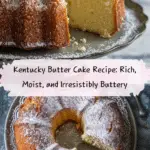
Why You’ll Love Kentucky Butter Cake Recipe Recipe
There are plenty of reasons why Kentucky Butter Cake deserves a place in your collection of favorite homemade desserts.
-
Incredibly moist texture: The combination of buttermilk, butter, and a rich vanilla glaze keeps the cake soft and tender.
-
Simple pantry ingredients: You only need everyday baking staples, making this recipe convenient and budget-friendly.
-
Delicious buttery flavor: Real butter gives the cake a rich taste that pairs beautifully with vanilla.
-
Easy preparation: The straightforward mixing method makes this cake approachable even for beginner bakers.
-
Perfect for special occasions: Its elegant Bundt shape makes an impressive centerpiece without complicated decorating.
-
Great for making ahead: The cake tastes wonderful the next day as the buttery sauce continues to settle into the crumb.
-
No frosting required: The sweet butter sauce provides plenty of flavor and moisture on its own.
-
Versatile serving options: Enjoy it plain or serve it with fresh berries, whipped cream, or vanilla ice cream.
Ingredients
The secret to a delicious Kentucky Butter Cake is using quality ingredients and preparing the buttery glaze while the cake is still warm.
(Tip: You’ll find the full list of ingredients and measurements in the recipe card below.)
For the Cake
-
3 cups all-purpose flour
-
2 cups granulated sugar
-
1 teaspoon salt
-
1 teaspoon baking powder
-
1/2 teaspoon baking soda
-
1 cup buttermilk
-
1 cup unsalted butter, softened
-
2 teaspoons vanilla extract
-
4 large eggs
For the Butter Sauce
-
3/4 cup granulated sugar
-
1/3 cup unsalted butter
-
3 tablespoons water
-
2 teaspoons vanilla extract
Ingredient Notes
Butter: Use softened butter for the cake batter so it blends smoothly with the remaining ingredients. Real butter is essential for achieving the signature rich flavor.
Buttermilk: Buttermilk adds moisture and a slight tanginess while helping create a tender crumb. If you don’t have buttermilk, combine 1 tablespoon of lemon juice or white vinegar with enough milk to make 1 cup. Let it sit for 5–10 minutes before using.
All-purpose flour: Regular all-purpose flour provides the right structure for this dense yet tender Bundt cake. Measure carefully to avoid adding too much flour.
Vanilla extract: Pure vanilla extract gives both the cake and the sauce a warm, aromatic flavor.
Eggs: Large eggs help bind the ingredients together and contribute to the cake’s structure and richness.
Granulated sugar: Sugar sweetens the cake and creates a delicate sugary finish when combined with the butter sauce.
Directions
Making Kentucky Butter Cake is surprisingly simple. Follow these steps for a perfectly baked cake with a rich, buttery finish.
Step 1: Preheat the Oven
Preheat your oven to 325°F (165°C).
Generously grease a 10-inch Bundt pan with butter or baking spray, making sure to cover every groove and the center tube. Lightly dust the pan with flour and shake out any excess.
Properly preparing the pan is important because the buttery glaze can make the cake more likely to stick.
Step 2: Combine the Dry Ingredients
In a large mixing bowl, combine the flour, granulated sugar, salt, baking powder, and baking soda.
Whisk everything together until evenly distributed. This helps ensure the leavening ingredients are incorporated throughout the batter.
Step 3: Add the Wet Ingredients
Add the buttermilk, softened butter, vanilla extract, and eggs to the dry ingredients.
Using an electric mixer, begin mixing on low speed until the ingredients are moistened.
Increase the mixer speed to medium and beat for approximately 3 minutes, until the batter becomes smooth, thick, and creamy.
Scrape down the sides of the bowl as needed to ensure everything is thoroughly incorporated.
Step 4: Fill the Bundt Pan
Pour the prepared batter evenly into the greased and floured Bundt pan.
Use a spatula to smooth the surface.
Gently tap the pan against the countertop once or twice to release any large air pockets.
Step 5: Bake the Cake
Place the Bundt pan in the preheated oven and bake for approximately 60 minutes.
The cake is ready when the top is golden brown and a wooden toothpick inserted into the thickest part comes out clean or with a few moist crumbs.
If the cake needs additional time, continue baking in 5-minute increments while checking for doneness.
Avoid overbaking, as this can cause the cake to become dry.
Step 6: Prepare the Butter Sauce
While the cake is finishing in the oven, prepare the buttery vanilla sauce.
In a small saucepan, combine:
-
3/4 cup granulated sugar
-
1/3 cup butter
-
3 tablespoons water
-
2 teaspoons vanilla extract
Place the saucepan over medium-low heat.
Stir gently until the butter melts and the sugar dissolves into a smooth mixture.
Do not allow the sauce to boil.
Remove the saucepan from the heat once the ingredients are fully combined.
Step 7: Add the Butter Sauce
Remove the baked cake from the oven, leaving it inside the Bundt pan.
While the cake is still warm, use a wooden skewer or long fork to poke holes across its surface.
Slowly pour the warm butter sauce over the cake, allowing it to seep into the holes.
Pour the sauce in several additions so it has time to absorb instead of collecting on the surface.
This step gives Kentucky Butter Cake its signature moist texture and rich flavor.
Step 8: Cool and Remove From the Pan
Allow the cake to cool completely in the Bundt pan so the sauce can soak into the crumb and settle.
Once cooled, carefully run a thin spatula around the outer edges and center tube if necessary.
Place a serving plate over the pan and gently invert it to release the cake.
If the cake resists, avoid forcing it. Carefully loosen any areas that may be sticking before trying again.
Step 9: Slice and Serve
Transfer the cake to a serving platter and cut it into generous slices.
Serve it as it is, or add a light dusting of powdered sugar for an elegant presentation.
For an extra-special dessert, pair each slice with fresh strawberries, whipped cream, or a scoop of vanilla ice cream.
Servings and Timing
This Kentucky Butter Cake recipe makes one 10-inch Bundt cake, perfect for sharing with family and friends.
-
Prep Time: 30 minutes
-
Cook Time: 60 minutes
-
Cooling Time: Approximately 30–60 minutes, or until completely cooled
-
Total Time: Approximately 2–2½ hours, including cooling
-
Servings: 12 slices
-
Course: Dessert
-
Cuisine: American
-
Cooking Method: Baking
-
Difficulty: Easy
The exact cooling time may vary depending on the temperature of your kitchen and the type of Bundt pan used.
Variations
One of the best things about Kentucky Butter Cake is how easily you can customize its flavor while maintaining its signature buttery texture.
1. Lemon Kentucky Butter Cake
Add 1 tablespoon of freshly grated lemon zest to the cake batter.
For the sauce, replace 1 tablespoon of the water with fresh lemon juice.
The citrus adds a refreshing brightness that balances the rich butter flavor.
2. Almond Butter Cake
Replace 1 teaspoon of the vanilla extract in the cake with 1/2 teaspoon of almond extract.
You can also add a few drops of almond extract to the butter sauce.
This variation creates a delicate nutty aroma that complements the cake’s sweetness.
3. Bourbon Butter Cake
For a more traditional Southern-inspired twist, replace 1–2 tablespoons of the water in the butter sauce with bourbon.
The bourbon adds a warm, caramel-like depth that pairs beautifully with vanilla and butter.
This variation is intended for adults.
4. Brown Sugar Butter Cake
Replace half of the granulated sugar in the butter sauce with light brown sugar.
The brown sugar creates a deeper caramel flavor and gives the sauce a slightly richer color.
5. Cinnamon Vanilla Butter Cake
Add 1 teaspoon of ground cinnamon to the cake batter.
You can also include a small pinch of nutmeg for a warm, comforting flavor.
This version is especially delicious during fall and winter.
6. Orange Butter Cake
Add 1 tablespoon of orange zest to the batter and substitute 1 tablespoon of the water in the sauce with fresh orange juice.
The orange adds a fragrant citrus note without overpowering the buttery cake.
7. Pecan Butter Cake
Fold 3/4 cup of finely chopped toasted pecans into the batter before baking.
The nuts provide a pleasant crunch and a rich, roasted flavor.
For extra texture, sprinkle additional chopped pecans over the finished cake.
Storage/Reheating
Kentucky Butter Cake stores exceptionally well because the buttery sauce helps maintain its moisture.
Room Temperature Storage
Once the cake has cooled completely, place it in an airtight cake container or wrap it tightly in plastic wrap.
Store at room temperature for up to 3 days in a cool, dry environment.
Avoid leaving the cake uncovered, as exposure to air can dry out the surface.
Refrigerator Storage
For longer storage, keep the cake in an airtight container in the refrigerator for up to 5 days.
Refrigeration can make the butter in the cake firm, so allow individual slices to return to room temperature before serving for the best texture.
Freezing Instructions
Kentucky Butter Cake freezes beautifully, making it an excellent make-ahead dessert.
Allow the cake to cool completely before freezing.
Wrap the entire cake or individual slices tightly in plastic wrap, followed by aluminum foil.
Place the wrapped portions in a freezer-safe container or bag.
Freeze for up to 3 months for the best quality.
When ready to enjoy, thaw the cake overnight in the refrigerator or allow individual slices to thaw at room temperature.
How to Reheat Kentucky Butter Cake
Although this cake tastes delicious at room temperature, gently warming it can enhance its buttery flavor.
For individual slices:
-
Place a slice on a microwave-safe plate.
-
Microwave for approximately 10–15 seconds.
-
Check the temperature and warm for a few more seconds if necessary.
-
Serve immediately.
Avoid overheating, as this can make the cake dry or rubbery.
For an extra indulgent dessert, serve the warm cake with a scoop of vanilla ice cream.
FAQs
1. What is Kentucky Butter Cake?
Kentucky Butter Cake is a traditional American Bundt cake made with butter, sugar, eggs, flour, buttermilk, and vanilla. Its defining feature is a sweet butter sauce poured over the cake while it is still warm. The sauce absorbs into the crumb, creating an exceptionally moist texture and rich buttery flavor.
2. Why is my Kentucky Butter Cake dry?
A dry Kentucky Butter Cake is usually the result of overbaking, using too much flour, or not adding enough butter sauce.
To prevent dryness, measure your flour accurately, check the cake for doneness around the recommended baking time, and pour the butter sauce over the cake while it is still warm.
3. Can I make Kentucky Butter Cake without buttermilk?
Yes. If you don’t have buttermilk, add 1 tablespoon of white vinegar or lemon juice to a measuring cup and fill it with milk until it reaches 1 cup.
Stir and let the mixture rest for approximately 5–10 minutes before adding it to the batter.
This substitute provides acidity similar to buttermilk, although the flavor and texture may differ slightly.
4. Why did my Kentucky Butter Cake stick to the Bundt pan?
Bundt cakes can stick when the pan is not greased thoroughly, especially around the decorative grooves and center tube.
The sugary butter sauce can also contribute to sticking.
To prevent this problem, generously grease and flour the pan before adding the batter. After the cake cools, carefully loosen the edges before inverting it onto a serving plate.
5. Can I make Kentucky Butter Cake ahead of time?
Absolutely. Kentucky Butter Cake is an excellent make-ahead dessert.
You can prepare it one day before serving and store it in an airtight container.
The cake often tastes even better the following day because the butter sauce has had more time to distribute throughout the crumb.
6. Can I use salted butter instead of unsalted butter?
Yes, salted butter can be used in both the cake and the sauce.
However, because salted butter already contains sodium, consider reducing the added salt in the cake batter by approximately 1/4 teaspoon.
The exact adjustment depends on the salt content of the butter you use.
7. How do I know when Kentucky Butter Cake is fully baked?
The cake should have a golden-brown surface and feel slightly springy when gently touched.
Insert a wooden toothpick into the thickest section of the cake. If it comes out clean or with a few moist crumbs, the cake is ready.
If wet batter sticks to the toothpick, continue baking for a few more minutes.
8. Can I bake Kentucky Butter Cake in a regular cake pan?
Yes, although a Bundt pan is recommended for the traditional shape and even baking.
You can divide the batter between two appropriately sized round cake pans, making sure not to fill them more than two-thirds full.
The baking time will be shorter, so begin checking for doneness after approximately 25–30 minutes.
Keep in mind that the final texture and presentation may differ from the classic Bundt version.
9. Should Kentucky Butter Cake be served warm or cold?
Kentucky Butter Cake is delicious at room temperature, slightly warm, or chilled.
Room temperature is ideal for appreciating its soft crumb and rich buttery flavor.
For a comforting dessert, warm individual slices briefly in the microwave and serve with whipped cream or vanilla ice cream.
10. Can I freeze Kentucky Butter Cake after adding the butter sauce?
Yes. Kentucky Butter Cake can be frozen after the butter sauce has been absorbed and the cake has cooled completely.
Wrap it tightly to prevent freezer burn and store it for up to 3 months.
Thaw before serving, and allow the cake to reach room temperature for the best flavor and texture.
Conclusion
Kentucky Butter Cake is a timeless dessert that proves simple ingredients can create something truly special. With its golden exterior, soft vanilla-flavored crumb, and rich buttery sauce, every slice offers a wonderful balance of sweetness, moisture, and comforting homemade flavor.
This recipe is especially appealing because it doesn’t require elaborate decorating or complicated baking techniques. The straightforward preparation makes it suitable for beginners, while the beautiful Bundt shape and irresistible flavor make it impressive enough for holidays, birthdays, potlucks, and family celebrations.
The buttery glaze is what truly sets this cake apart. By soaking into the warm cake, it creates a tender texture and a deliciously sweet finish that remains enjoyable for days.
Whether you serve it plain with a cup of coffee, alongside fresh berries, or slightly warm with vanilla ice cream, this homemade Kentucky Butter Cake is a dessert worth making again and again.
Kentucky Butter Cake Recipe: Rich, Moist, and Irresistibly Buttery

Kentucky Butter Cake is a rich, moist vanilla Bundt cake with a tender, buttery crumb. A warm butter-sugar glaze soaks into the cake, creating an irresistible golden crust and a deliciously sweet finish.
- Prep Time: 20 minutes
- Cook Time: 70 minutes
- Total Time: 1 hour 50 minutes
- Yield: 12 servings
- Category: Dessert
- Method: Baking
- Cuisine: American
- Diet: Vegetarian
Ingredients
- 3 cups all-purpose flour
- 2 cups white sugar
- 1 cup butter, softened
- 1 cup buttermilk
- 4 large eggs
- 2 teaspoons vanilla extract
- 1 teaspoon baking powder
- 1 teaspoon baking soda
- 1 teaspoon salt
- For the butter glaze:
- 3/4 cup white sugar
- 1/3 cup butter
- 3 tablespoons water
- 2 teaspoons vanilla extract
Instructions
- Preheat the oven to 325°F (165°C). Generously grease and flour a 10-inch Bundt pan or tube pan, making sure to coat all the grooves.
- In a large mixing bowl, combine the flour, 2 cups sugar, 1 cup softened butter, buttermilk, eggs, 2 teaspoons vanilla extract, baking powder, baking soda, and salt.
- Beat with an electric mixer on low speed until the ingredients are moistened, then increase to medium speed and beat for about 3 minutes until the batter is smooth and well combined.
- Pour the batter evenly into the prepared Bundt pan and smooth the top with a spatula.
- Bake for 60 to 70 minutes, or until a wooden toothpick inserted into the center comes out clean.
- While the cake is baking, prepare the butter glaze. Combine 3/4 cup sugar, 1/3 cup butter, 3 tablespoons water, and 2 teaspoons vanilla extract in a small saucepan over medium-low heat.
- Cook, stirring continuously, until the butter melts and the sugar dissolves. Do not allow the mixture to boil.
- Remove the baked cake from the oven and leave it in the pan. While the cake is still warm, poke holes across the surface using a wooden skewer or toothpick.
- Slowly pour the warm butter glaze over the cake, allowing it to soak into the holes and around the edges.
- Let the cake cool completely in the pan before carefully inverting it onto a serving plate.
- Slice and serve at room temperature for the best buttery flavor and moist texture.
Notes
- Use room-temperature butter, eggs, and buttermilk for a smooth, evenly mixed batter.
- If you do not have buttermilk, add 1 tablespoon of lemon juice or white vinegar to a measuring cup and fill with milk to make 1 cup. Let stand for 5 to 10 minutes before using.
- Grease and flour the Bundt pan thoroughly to prevent the cake from sticking.
- Do not boil the glaze. Heat it gently until the butter melts and the sugar dissolves.
- Pour the glaze over the cake while it is still warm so it absorbs evenly.
- Allow the cake to cool completely before removing it from the pan to help prevent breaking.
- The cake tastes even better the next day as the butter glaze continues to soak into the crumb.
- Store covered at room temperature for up to 3 days or refrigerate for up to 1 week.
- Freeze individual slices tightly wrapped for up to 3 months.
- Serve plain or with fresh berries, whipped cream, or a light dusting of powdered sugar.
Nutrition
- Serving Size: 1 slice (1/12 of cake)
- Calories: 508 kcal
- Sugar: 49 g
- Sodium: 410 mg
- Fat: 23 g
- Saturated Fat: 14 g
- Unsaturated Fat: 7 g
- Trans Fat: 0.8 g
- Carbohydrates: 71 g
- Fiber: 1 g
- Protein: 6 g
- Cholesterol: 115 mg