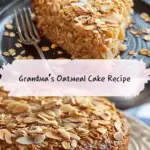
Why You’ll Love Grandma’s Oatmeal Cake Recipe Recipe
There are plenty of reasons why this classic oatmeal cake deserves a place in your collection of favorite homemade desserts.
-
Incredibly moist texture: Soaking rolled oats in boiling water creates a tender, moist cake that stays delicious for days.
-
Delicious coconut almond topping: The buttery, caramelized topping adds sweetness, crunch, and a wonderful toasted flavor.
-
Simple pantry ingredients: Most ingredients are everyday baking staples you may already have in your kitchen.
-
Easy to prepare: This straightforward recipe doesn’t require complicated techniques or special baking equipment.
-
Perfect for gatherings: A single 9×13-inch cake provides enough servings for family dinners, celebrations, and potlucks.
-
Warm, comforting flavors: Cinnamon, nutmeg, brown sugar, and oats create a delicious homemade flavor.
-
Great for making ahead: The cake remains moist and flavorful, making it an excellent dessert to prepare in advance.
Unlike traditional sponge cakes, oatmeal cake has a slightly dense, tender crumb that makes every bite rich and satisfying.
Ingredients
(Tip: You’ll find the full list of ingredients and measurements in the recipe card below.)
The ingredients for Grandma’s Oatmeal Cake are divided into two parts: the moist oatmeal cake and its delicious coconut almond topping.
For the Oatmeal Cake
-
1 cup old-fashioned rolled oats
-
1/2 cup unsalted butter
-
1 1/2 cups boiling water
-
2 large eggs
-
1 cup light brown sugar, packed
-
1 cup granulated sugar
-
1 1/3 cups all-purpose flour
-
1 teaspoon ground cinnamon
-
1 teaspoon baking soda
-
1/2 teaspoon ground nutmeg
-
1/2 teaspoon salt
For the Coconut Almond Topping
-
6 tablespoons butter, softened to room temperature
-
1 cup sweetened shredded coconut
-
1/2 cup evaporated milk
-
1/2 cup light brown sugar, packed
-
1 cup chopped almonds or other preferred nuts
-
1 teaspoon vanilla extract
Ingredient Notes and Helpful Tips
Old-fashioned rolled oats: These are essential for achieving the cake’s characteristic texture. They soften when soaked in boiling water while still providing a little structure. Quick oats can produce a softer, less distinctive texture.
Butter: Butter adds richness and helps keep the cake tender. It also contributes to the delicious caramelized flavor of the topping.
Brown sugar: Light brown sugar provides sweetness, moisture, and subtle caramel notes that complement the oats and warm spices.
Cinnamon and nutmeg: These spices give the cake its comforting, traditional flavor. Fresh spices provide the best aroma.
Evaporated milk: This concentrated milk creates a creamy, rich topping without making it excessively watery.
Shredded coconut: Sweetened coconut develops a golden, toasted finish under the broiler, adding flavor and texture.
Chopped almonds: Almonds provide a satisfying crunch. Pecans or walnuts are excellent alternatives.
Directions
Making Grandma’s Oatmeal Cake is surprisingly simple. Follow these steps to create a moist, flavorful cake with a perfectly golden coconut almond topping.
Step 1: Preheat the Oven and Prepare the Pan
Preheat your oven to 350°F (175°C).
Lightly grease a 9×13-inch baking pan with butter or nonstick cooking spray.
Make sure the entire bottom and sides of the pan are coated to prevent sticking.
Step 2: Soften the Oats
Place the rolled oats and 1/2 cup butter in a medium mixing bowl.
Carefully pour 1 1/2 cups of boiling water over the mixture.
Stir gently until the butter begins to melt, then allow the mixture to rest while preparing the remaining ingredients.
The hot water softens the oats, allowing them to blend smoothly into the cake batter and create a tender texture.
Step 3: Combine the Eggs and Sugars
In a large mixing bowl, add the eggs, light brown sugar, and granulated sugar.
Beat with a whisk or electric mixer until the ingredients are thoroughly combined and the mixture becomes smooth.
This step helps distribute the sugars evenly throughout the batter.
Step 4: Mix the Dry Ingredients
In a separate bowl, combine the all-purpose flour, ground cinnamon, baking soda, nutmeg, and salt.
Whisk until the ingredients are evenly distributed.
Mixing the dry ingredients separately helps prevent uneven pockets of baking soda or spices in the finished cake.
Step 5: Prepare the Cake Batter
Gradually add the dry ingredients to the egg and sugar mixture.
Stir gently until the flour is incorporated.
Next, add the softened oatmeal mixture, including any remaining liquid.
Mix until everything is evenly combined.
Avoid excessive mixing, which can make the finished cake tougher.
The batter will be relatively loose because of the moisture from the soaked oats. This is normal.
Step 6: Bake the Oatmeal Cake
Pour the batter into the prepared baking pan.
Spread it evenly with a spatula.
Place the pan in the preheated oven and bake for approximately 35 minutes.
The cake is ready when the center is set and a toothpick inserted into the middle comes out clean or with a few moist crumbs.
Avoid overbaking, as this can reduce the cake’s signature moisture.
Step 7: Prepare the Coconut Almond Topping
While the cake bakes, prepare the topping.
In a medium bowl, combine the softened butter, sweetened shredded coconut, evaporated milk, brown sugar, chopped almonds, and vanilla extract.
Mix thoroughly until the ingredients form a thick, evenly combined mixture.
Set the topping aside until the cake finishes baking.
Step 8: Add the Topping
Once the cake is fully baked, carefully remove it from the oven.
Switch the oven setting to high broil.
Spoon the coconut almond mixture evenly over the warm cake.
Use a spatula to gently spread the topping across the entire surface.
Work carefully to avoid tearing the soft cake.
Step 9: Broil Until Golden
Return the cake to the oven, positioning it at a safe distance from the broiler heating element.
Broil for approximately 2–4 minutes, watching continuously.
The topping should become bubbly, lightly caramelized, and golden brown.
Because coconut and sugar can burn quickly, never leave the cake unattended during this step.
Step 10: Cool and Serve
Remove the cake from the oven and place the pan on a wire cooling rack.
Allow the topping to settle and the cake to cool slightly before slicing.
Cut into squares and serve warm or at room temperature.
The combination of tender oatmeal cake and golden coconut almond topping makes this dessert delicious without any additional frosting.
Servings and timing
Grandma’s Oatmeal Cake is an excellent dessert for sharing because it produces a generous number of servings without requiring extensive preparation.
Prep Time
10 minutes
Cook Time
40 minutes
Total Time
50 minutes
Servings
15 slices
Additional recipe details:
-
Baking temperature: 350°F (175°C)
-
Baking pan: 9×13 inches
-
Main baking time: Approximately 35 minutes
-
Broiling time: 2–4 minutes
-
Difficulty level: Easy
-
Approximate calories: 399 per serving
The total cooking time includes baking and broiling. Allow additional time for cooling before serving.
For smaller portions, cut the cake into 18–20 squares. For larger dessert servings, divide it into 12 pieces.
Variations
Although the classic version is delicious, Grandma’s Oatmeal Cake is easy to customize with different flavors and toppings.
1. Classic Walnut Oatmeal Cake
Replace the chopped almonds with an equal amount of chopped walnuts.
Walnuts add a slightly earthy flavor that complements the sweetness of the coconut and brown sugar.
This variation is especially delicious with cinnamon and nutmeg.
2. Southern Pecan Oatmeal Cake
Substitute chopped pecans for the almonds.
Pecans provide a rich, buttery flavor and become wonderfully toasted when broiled.
For additional depth, lightly toast the pecans before adding them to the topping.
3. Coconut-Free Oatmeal Cake
If you prefer a dessert without coconut, replace the shredded coconut with additional chopped nuts.
The topping will have a different texture but still develop a delicious caramelized finish.
4. Apple Cinnamon Oatmeal Cake
Fold approximately 1 cup of finely diced, peeled apples into the batter before baking.
The apples add natural sweetness and extra moisture.
Because the additional fruit changes the batter’s moisture content, the cake may require a few extra minutes in the oven.
5. Raisin Oatmeal Cake
Add 1/2 cup of raisins to the batter.
For softer raisins, soak them briefly in warm water, drain thoroughly, and fold them into the mixture before baking.
Raisins pair beautifully with the cake’s warm spices.
6. Extra-Spiced Oatmeal Cake
Enhance the warm flavors by adding a pinch of ground cloves or allspice to the dry ingredients.
This version is particularly enjoyable during autumn and winter.
7. Chocolate Chip Oatmeal Cake
Fold 1/2 cup of semisweet chocolate chips into the prepared batter.
Chocolate adds another layer of richness and creates a dessert that appeals to chocolate lovers.
The coconut topping can remain unchanged or be replaced with a simple chocolate glaze.
8. Reduced-Sugar Oatmeal Cake
For a less sweet dessert, slightly reduce the granulated sugar in the cake batter.
Keep in mind that reducing sugar may affect moisture and texture.
You can also use unsweetened shredded coconut in the topping to reduce its sweetness.
Storage/Reheating
Grandma’s Oatmeal Cake stores beautifully, making it convenient for preparing ahead of celebrations or enjoying leftovers throughout the week.
Storing at Room Temperature
Allow the cake to cool completely before covering it.
Store in an airtight container or tightly cover the baking pan with plastic wrap or aluminum foil.
Keep at room temperature for up to 2 days in a cool, dry environment.
If your kitchen is particularly warm or humid, refrigeration is the safer option.
Refrigerating the Cake
For longer storage, transfer the cooled cake to an airtight container.
Refrigerate for up to 5 days.
To maintain the best texture, keep the cake covered so it doesn’t absorb refrigerator odors or dry out.
Allow refrigerated slices to reach room temperature before serving, or warm them gently.
Freezing Grandma’s Oatmeal Cake
This cake can be frozen for future enjoyment.
Allow it to cool completely, then cut it into individual portions.
Wrap each slice tightly in plastic wrap and place the wrapped pieces inside a freezer-safe container or resealable freezer bag.
Freeze for up to 3 months for the best quality.
When ready to serve, thaw the slices overnight in the refrigerator.
Reheating in the Microwave
Place a slice on a microwave-safe plate.
Heat for approximately 10–20 seconds, checking frequently.
The cake should become pleasantly warm without overheating.
Microwaving softens the topping, so use the oven if you prefer a slightly crispier finish.
Reheating in the Oven
Preheat the oven to 300°F (150°C).
Place the cake in an oven-safe dish and warm for approximately 8–10 minutes, or until heated through.
Cover loosely with foil if the coconut topping begins to brown too quickly.
Making the Cake Ahead of Time
Grandma’s Oatmeal Cake is a wonderful make-ahead dessert.
You can prepare it one day before serving and store it tightly covered.
The oats help retain moisture, and the flavors have time to blend together.
For gatherings, bake the cake the day before and slice it shortly before serving.
FAQs
1. Can I use quick oats instead of old-fashioned rolled oats?
Yes, quick oats can be used if necessary, but old-fashioned rolled oats are recommended. Rolled oats provide a more distinctive texture and help create the traditional moist, slightly hearty crumb. Quick oats absorb liquid differently and may produce a softer, denser cake.
2. Why is my oatmeal cake so moist?
The cake gets much of its moisture from the oats soaked in boiling water. The oats absorb liquid and release moisture into the batter as it bakes. Brown sugar and butter also help create a soft, tender texture. A moist, slightly dense crumb is a normal characteristic of this dessert.
3. Can I make Grandma’s Oatmeal Cake without coconut?
Absolutely. You can omit the coconut and use additional chopped nuts in the topping. Pecans, walnuts, and almonds all work well. The finished topping will have a different consistency, but it can still develop a delicious caramelized flavor under the broiler.
4. Do I need to cook the coconut topping before spreading it on the cake?
No. The topping ingredients are simply mixed together and spread over the fully baked, warm cake. The broiling process melts the butter and sugar while toasting the coconut and nuts. This creates the golden, caramelized topping without requiring a separate cooking step.
5. Can I make oatmeal cake a day in advance?
Yes. This cake is an excellent make-ahead dessert because it retains moisture well. Bake the cake, add the topping, and allow everything to cool completely. Cover tightly and store in a cool place or refrigerate until serving. Many people enjoy the flavor even more the following day.
6. Why did my oatmeal cake turn out dense?
Oatmeal cake naturally has a denser texture than a traditional vanilla sponge cake. However, excessive density may result from overmixing, inaccurate flour measurements, expired baking soda, or using the wrong pan size. Measure ingredients carefully and stir the batter only until combined.
7. Can I use pecans or walnuts instead of almonds?
Yes. Pecans and walnuts are excellent substitutes for almonds. Use the same quantity of chopped nuts called for in the recipe. Pecans create a buttery flavor, while walnuts offer a slightly deeper, earthier taste. Both become deliciously toasted under the broiler.
8. How do I know when the oatmeal cake is fully baked?
Insert a toothpick into the center of the cake after approximately 35 minutes of baking. If it comes out clean or with a few moist crumbs, the cake is ready. If wet batter sticks to the toothpick, continue baking for a few more minutes and test again. The center should also appear set rather than jiggly.
9. Can I freeze oatmeal cake with the coconut topping?
Yes. The cake can be frozen with its topping already attached. Cool completely, wrap individual portions tightly, and store them in a freezer-safe container for up to 3 months. Thaw in the refrigerator before serving. The topping may soften slightly after freezing, but the cake should remain flavorful.
10. What should I serve with Grandma’s Oatmeal Cake?
This cake is delicious on its own, but it also pairs wonderfully with vanilla ice cream, freshly whipped cream, or a warm cup of coffee. For a lighter accompaniment, serve it with fresh berries or sliced fruit. A small scoop of vanilla ice cream is especially enjoyable alongside a warm slice.
Conclusion
Grandma’s Oatmeal Cake is a timeless homemade dessert that brings together simple ingredients, comforting flavors, and an irresistible coconut almond topping. Its tender, moist crumb and golden caramelized finish make it a wonderful alternative to traditional frosted cakes.
With easy preparation, affordable ingredients, and plenty of opportunities for customization, this old-fashioned oatmeal cake is perfect for both beginner and experienced home bakers. Whether you’re preparing dessert for a family dinner, bringing something homemade to a potluck, or simply craving a sweet treat, this recipe delivers satisfying flavor in every bite.
The combination of rolled oats, warm spices, brown sugar, and toasted coconut creates a dessert that feels both nostalgic and special. Best of all, it tastes wonderful freshly baked and remains delicious when prepared ahead of time.
Give Grandma’s Oatmeal Cake a try whenever you want a comforting, homemade dessert that’s easy to share and sure to become a family favorite.
Grandma’s Oatmeal Cake Recipe – A Moist, Old-Fashioned Dessert with Coconut Almond Topping

Grandma’s Oatmeal Cake is a wonderfully moist, old-fashioned dessert made with tender oats, warm cinnamon, and a rich coconut-pecan topping. This comforting homemade cake is finished under the broiler for a deliciously golden, caramelized topping.
- Prep Time: 20 minutes
- Cook Time: 35 minutes
- Total Time: 55 minutes
- Yield: 12 servings
- Category: Dessert
- Method: Baking
- Cuisine: American
- Diet: Vegetarian
Ingredients
- 1 cup old-fashioned rolled oats
- 1 1/4 cups boiling water
- 1/2 cup unsalted butter, softened
- 1 cup granulated sugar
- 1 cup packed brown sugar
- 2 large eggs
- 1 teaspoon vanilla extract
- 1 1/2 cups all-purpose flour
- 1 teaspoon baking soda
- 1 teaspoon ground cinnamon
- 1/2 teaspoon salt
- For the topping:
- 1/2 cup unsalted butter, melted
- 2/3 cup packed brown sugar
- 1/4 cup milk
- 1 teaspoon vanilla extract
- 1 cup sweetened shredded coconut
- 1 cup chopped pecans
Instructions
- Preheat the oven to 350°F (175°C). Grease a 9×13-inch baking pan.
- Place the rolled oats in a heatproof bowl and pour the boiling water over them. Stir and let stand for about 15–20 minutes, until the oats soften and absorb most of the water.
- In a large mixing bowl, cream together the softened butter, granulated sugar, and brown sugar until light and fluffy.
- Add the eggs one at a time, mixing well after each addition. Stir in the vanilla extract.
- Mix in the softened oatmeal mixture until evenly combined.
- In a separate bowl, whisk together the flour, baking soda, cinnamon, and salt.
- Gradually add the dry ingredients to the oatmeal mixture, stirring just until combined. Avoid overmixing.
- Pour the batter into the prepared baking pan and spread evenly.
- Bake for 30–35 minutes, or until a toothpick inserted into the center comes out clean or with a few moist crumbs.
- While the cake bakes, prepare the topping by combining the melted butter, brown sugar, milk, vanilla extract, shredded coconut, and chopped pecans in a bowl.
- Remove the baked cake from the oven and spread the coconut-pecan topping evenly over the warm surface.
- Switch the oven to broil and return the cake to the oven for approximately 1–3 minutes, watching constantly, until the topping becomes bubbly and lightly golden brown.
- Remove the cake from the oven and allow it to cool slightly before slicing and serving.
Notes
- This is an adapted version of a traditional oatmeal cake; ingredient quantities and directions have not been verified against the linked recipe.
- Old-fashioned rolled oats provide the best texture. Quick oats can be substituted, although the cake may be slightly softer.
- Allow the oats to soften completely before incorporating them into the batter for a moist, tender crumb.
- Watch the cake carefully while broiling because the coconut topping can burn very quickly.
- Walnuts can replace pecans, or the nuts can be omitted if preferred.
- Serve warm or at room temperature with coffee, tea, or a scoop of vanilla ice cream.
- Store covered at room temperature for up to 2 days or refrigerate for up to 5 days.
- Freeze individual slices in airtight containers for up to 3 months. Thaw before serving.
Nutrition
- Serving Size: 1 slice
- Calories: 525 kcal
- Sugar: 48 g
- Sodium: 235 mg
- Fat: 27 g
- Saturated Fat: 15 g
- Unsaturated Fat: 11 g
- Trans Fat: 0.5 g
- Carbohydrates: 69 g
- Fiber: 3 g
- Protein: 6 g
- Cholesterol: 85 mg